


Symmetric Reducer - Concentric Reducer
A symmetric reducer is also called:
-
steel concentric reducer,
-
coaxial reducer,
-
concentric reducer.
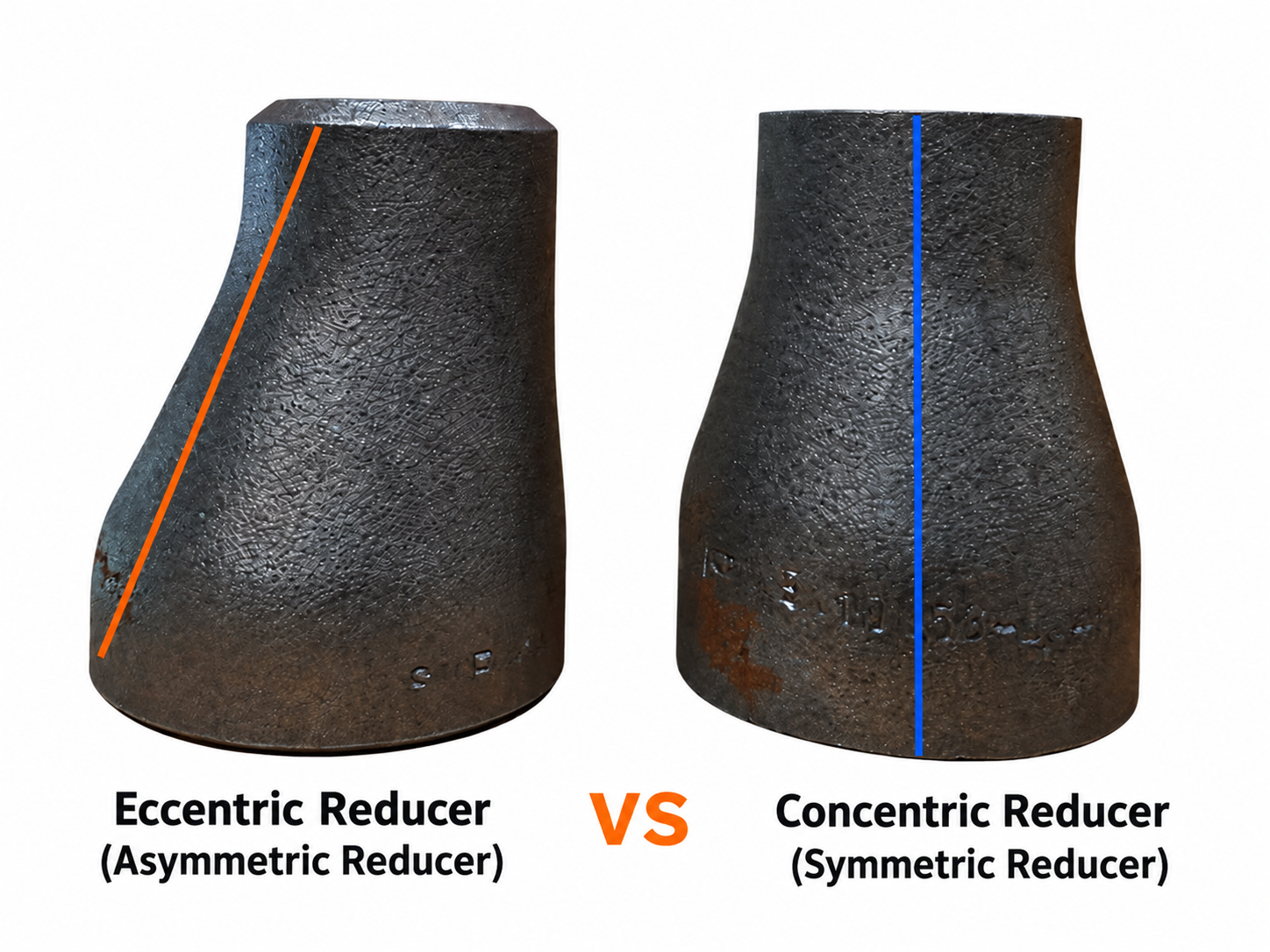
In a symmetric reducer, the centre of the larger and smaller connection is located on the same axis. The diameter decreases evenly on each side.
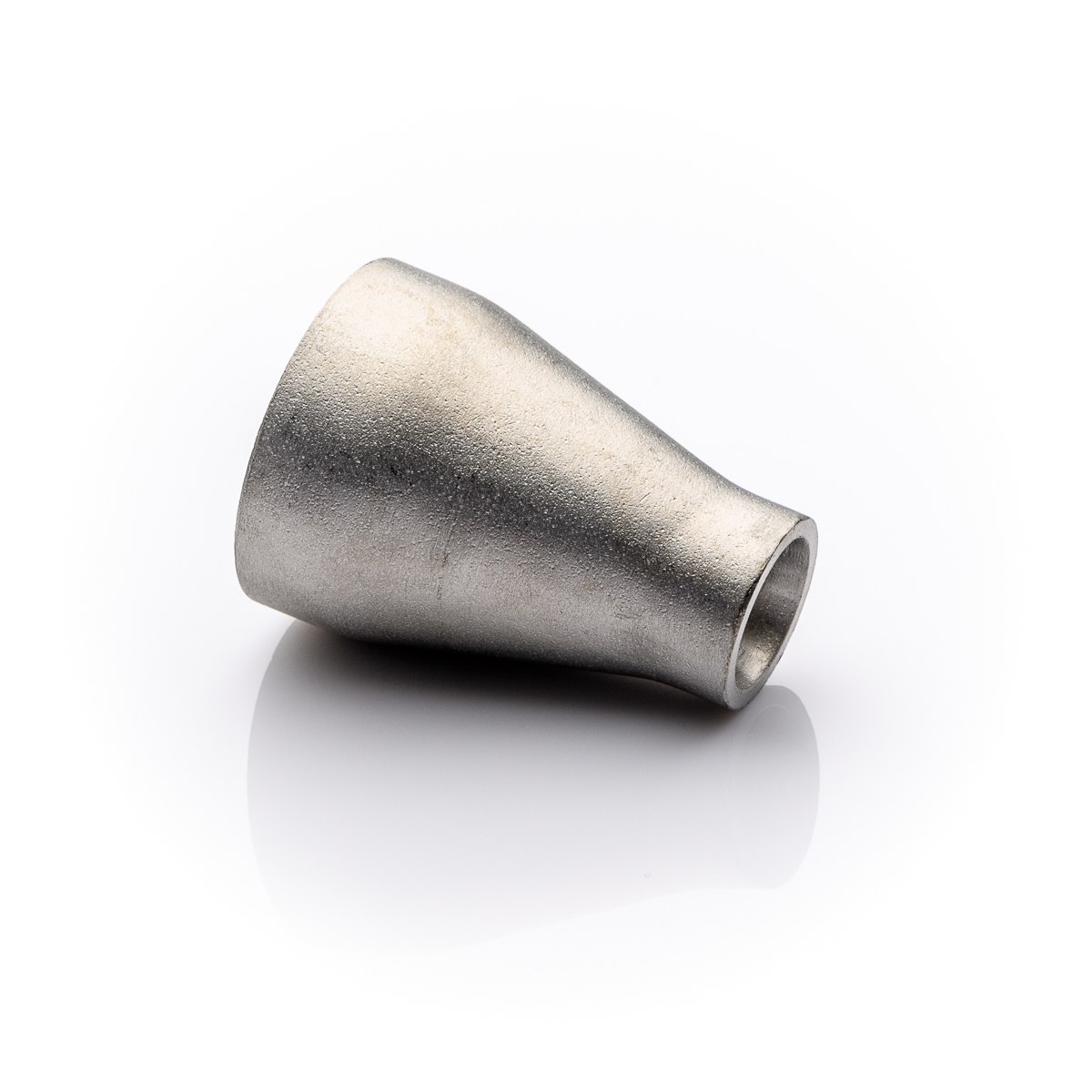
This means that after transitioning from a larger pipe to a smaller one, the axis of the installation remains in the same position.
Where is a symmetric reducer used?
Concentric reducers are very often used in installations running vertically. In such an arrangement, the symmetrical reduction of the pipeline usually does not create places where air or liquid could accumulate.
They can also be used in horizontal installations if the design of the installation and the type of medium being transported allow it.
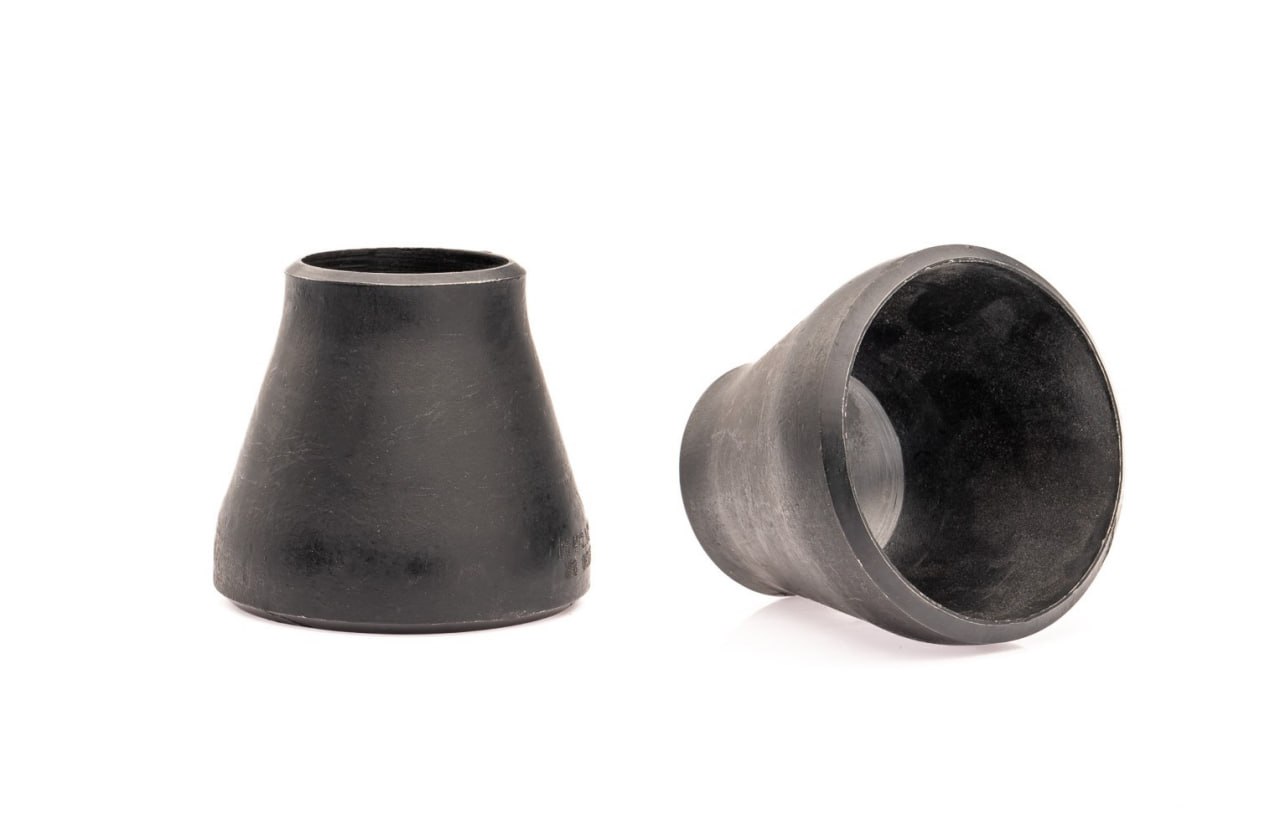
Schematically:
larger pipe → symmetric reducer → smaller pipe
the axis of the installation remains unchanged.
Eccentric Reducer – Asymmetric Reducer
An asymmetric reducer is also known as:
-
steel eccentric reducer,
-
offset reducer,
-
non-concentric reducer for welding
-
eccentric reducer,
-
colloquially sometimes “offset” reducer.
The term “non-concentric” is understandable, but in technical terminology the term eccentric is used much more often and is more correct.
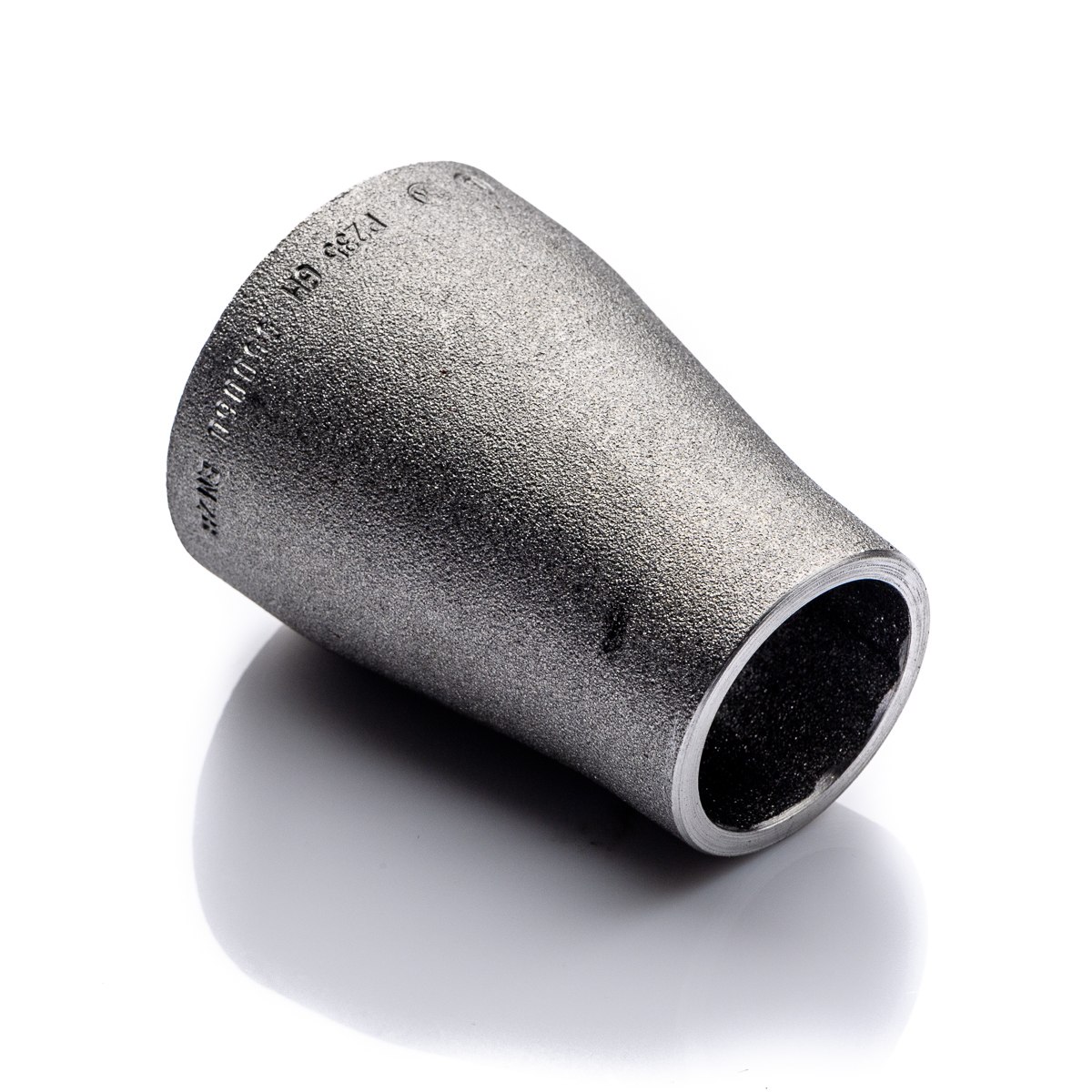
In an asymmetric reducer, the axes of the larger and smaller connections do not coincide. One side of the reducer may form an almost straight line, while the reduction takes place mainly on the other side.
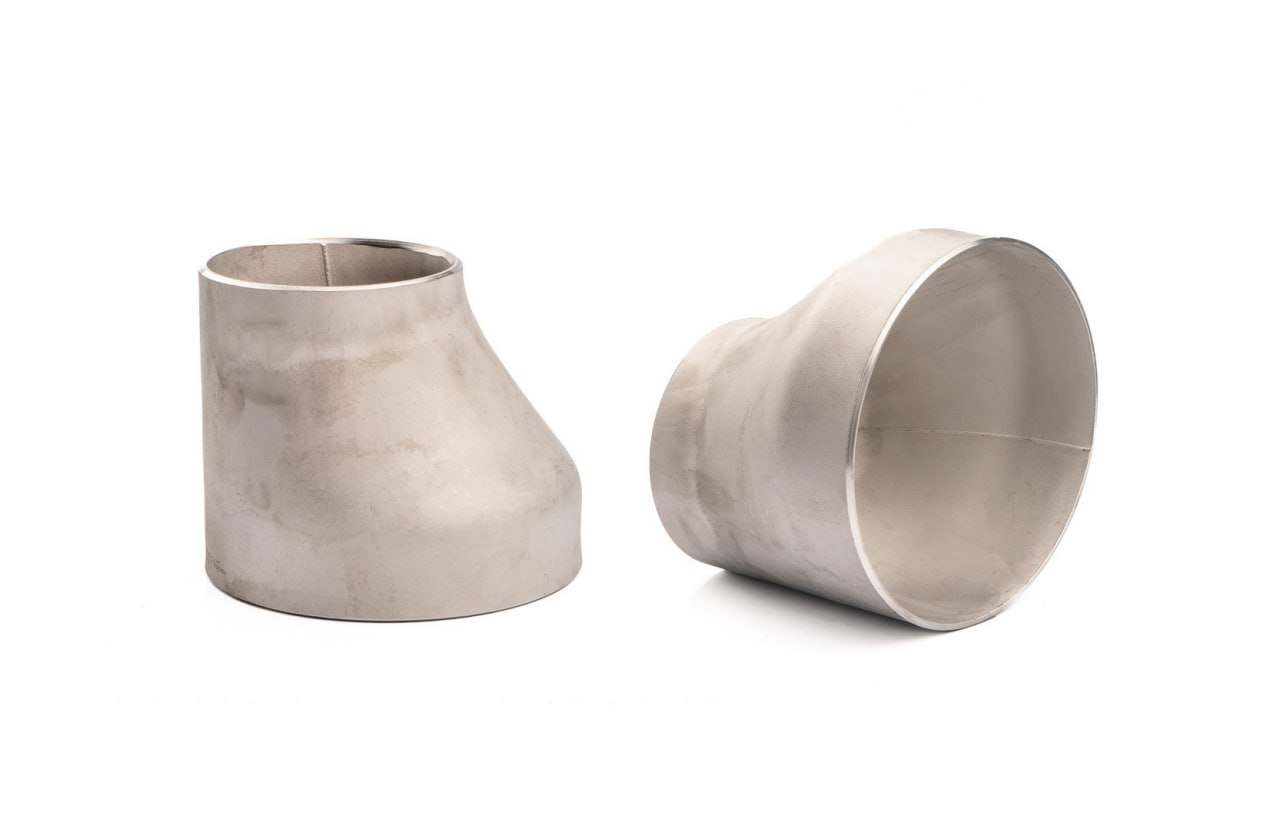
This makes it possible to change the pipeline diameter while keeping the upper or lower line of the installation at the same level.
Why is the direction of the installation so important?
This is where the most important practical difference between a symmetric and an asymmetric reducer appears.
In a horizontal installation, a concentric reducer changes both the upper and lower edges of the pipeline. This may create a place where air, gas or condensate can accumulate.
An eccentric reducer makes it possible to avoid this because its flat side can be positioned appropriately according to the direction and type of installation.
Liquid installations - flat side on top
In horizontal liquid installations, particularly on pump suction lines, an asymmetric reducer is often installed:
with the flat side on top.
This allows the upper part of the pipeline to run without a local “hump” where air could become trapped.
This makes it possible to maintain continuity of the lower edge of the pipeline and reduce the formation of places where condensate could accumulate.
However, the exact position of the reducer should always be determined by the installation design, the type of medium and its direction of flow.
Symmetric or Asymmetric – the Simplest Difference
| Feature | Symmetric Reducer | Asymmetric Reducer |
|---|---|---|
| Technical name | concentric | eccentric |
| English name | concentric reducer | eccentric reducer |
| Axis of both diameters | common | offset |
| Shape | uniform reduction | reduction offset to one side |
| Vertical installation | very commonly used | possible, but usually unnecessary |
| Horizontal installation | depending on the application | very commonly used |
| Possibility of maintaining one pipe line | no | yes |
| Colloquial name | straight reducer | “offset”, angled |
Summary
A symmetric – concentric reducer has both connections positioned on the same axis. It is most commonly used where the pipeline can reduce evenly, particularly in vertical installations.
An asymmetric – eccentric reducer, colloquially also called an “offset” reducer, has offset connection axes. It is particularly useful in horizontal installations because it allows a straight upper or lower pipeline line to be maintained and reduces the formation of places where air or condensate could accumulate.
Therefore, the choice between a concentric and eccentric reducer should not be made solely on the basis of diameter. The direction of the installation, type of medium and position of the reducer in the pipeline must also be taken into account.
Are you looking for a symmetric or asymmetric steel reducer for welding?
Check the offer in the POLBERIS shop. We offer concentric and eccentric reducers in various diameters, intended for industrial and installation applications. - >>Click Here<<
👉 Buy online in the POLBERIS shop: sklep.polberis.pl
If you are not sure which reducer to choose for your installation, contact us – we will help you select the appropriate solution.